Wednesday, April 03, 2019

Transformation, and You ?


I was on red-eye flight from Delhi to Singapore, and on arrival had to participate in a panel discussion on Organizational Transformation and managing change positively organized by HCLI, Singapore (Human Capital Leadership Institute) for a batch of senior executives in a major MNC that is likely to go into a major transformation journey. I had no time to prepare, and just as the flight was to land, the Eureka moment dawned upon me and I shared my thoughts, and participated in a Q&A. Here’s the gist for whatever its worth. Its personal, and its real  
When we talk about organizational transformation, we seem to take a myopic view of the subject of transformation. We are actually going through it all the time; it’s just that we may not be conscious. To me, it appears like a 3x3 jig, in place of the more familiar 2x2s that dominate all management concepts.
The 3x3, translates to 3 types of transformations we go through, at 3 different levels.  The types of transformation, I have seen are:
1.    Evolutionary Transformation, in all aspects of life, work, society whatever … we evolve. The journey from an ape to a modern man, and from a low-tech life to a digital life, have mostly been evolutionary. Either you are conscious or unconscious; it’s been largely a smooth ride, mostly for the better. For us who grew up in middle class India the journey from a ceiling fan to an Air conditioner at home was supreme delight. Organizations too grow through evolutionary transformation, often not turbulent, smooth, and made in small doses and everyone seems to be onboard. When you move offices, you tend to move to better ones, better-equipped and better technologies.
2.   Disruptive Transformations: These are unexpected, out of the blue and strike you hard when you seem most unprepared for it. These are incidents of closure, M&A, hostile takeovers, sudden change in management, crisis or huge opportunity. They are big, and they are sudden. It sort of throws you off your guard, and the turbulence created can also be a great wake up call. The uncertainties of it all, the unknown passages you need to walk through all of these are also opportunities for self-assessment and organizational renewal and reincarnations.
3.    Planned Transformations: These are more common, and have also come into vogue; to create impact, churn and a whole lot of management bandwidth goes into it. Well, improvements are necessary and integral however, planned transformations sometimes end up being a case of packaging improvements, to make them look better, good, and attractive and achieve greater impact. Change of internal management leadership or need to invigorate functions, divisions, and businesses have all called for these type of transformations, which also well peddled by management consultants. There is not much threatening in this, and provides an opportunity for managers to get creative and bash the status quo.
Now turning to the 3 environments, or contexts in which these 3 types of transformations play out:
1.             External Environment: It is about everything around us. The victory of Trump being felt in far flung Asia or say homes in Yangon or Chennai. We live in a connected world. The effect of the external environment on our work and personal lives every more than before, and impacts perception, feeling, strategy and action. We never discussed the impact of a Trump, in internal strategy meetings in Asia before. So is the case with a major technology breakthrough, or war or crisis.
2.            Internal Environment: Internal environment here maps out the work life and personal / social life. This is the closest concentric circle that we trudge through everyday. What happens to, and in, an organization has huge impact on us, and even more so what happens at home, family and social circle. There is a constant change and momentum in these environments.
3.            Inner Environment: This is the most important and is vital. It is the environment that we create for ourselves, in our “inner selves” – it is the sum total of our experiences, attitudes, beliefs, values, fears, complexes, and hopes. This acts as the epicenter of our emotions, and how we react, act, and work through the various transformations. It can lead to huge learning, self-renewal, growth and even reinventing oneself, or it can be an unbearable stress, leading to depression, and also self-destruction.
Whichever way you see it, other than evolutionary changes, most transformations do cause stress. The stress can be turned into a creative stress with a positive attitude or damaging one, if you turn the other way. Much would depend on what you are made of and how well you are tuned with the “inner environment”. Its tough, but you hold the key to managing transformations, by opening up and reflecting on your own inner environment and tuning it or re-tuning to make life a success. Accepting change is always talked about, but the devil is in the practice of it.
Some Interesting Q&A s:
How can you successfully steer org transformations, in the context of an acquisition?
Most organizations exist in solid state or at best semi-solid state. A post acquisition causes a sort of chemical reaction to make it into “molten state” or even a ‘fluid state’. There is a general state of fait accompli and people in the acquired entity are ready to accept (albeit reluctant) the changes that are inevitable.
It is for the leadership use this to their advantage, to steer this molten state to mold it the way it would render the unified organization deliver the positive delta in its value creation efforts. This requires exceptional leadership. A leader who lives the values, is authentic, and most importantly builds trust instantly. The biggest obstacle is often handling distrust and mistrust. It is for the leader to build that trust. That’s not easy, but great leaders are great at doing just that.
What is the worst experience in change / integration that you can relate to us, and how to prepare for it?
Well, the process is like walking through a dark tunnel. The tunnel could be deep and long, and trail unpredictable. However, what you need to look for first is whether you have enough water, food, air and essentials to exist keep you going. In other words, you have the security of the job, you need to continue conducting the existing business, protecting them, and play your role. Second, thankfully you will have the company of others, though it may be still dark for all. The comfort of a team, peers and seniors that one is used to, also in the tunnel is a major motivator. It builds greater team spirit in time of difficulty.
Finally, not just believing that there is light at the end of the tunnel but believing that truly there is a possibility of a colorful rainbow appearing makes the journey less stressful and more enjoyable. There is much humor in organizations that go through transitions; if only you could take yourself a bit less seriously. Learning to enjoy every moment is a good way to brace yourself.
Most important, this change too is going to pass one day. It is neither death nor a near death experience awaiting you, that we tend to make it, simply worrying about it.
In M&A when acquisitions appear so wonderful and perfect on paper, they don’t seem to happen that way eventually. What is your experience?
Yes, they look brilliant on spreadsheets, and even better on PPTs!!... Why? Because these are derivations from the “left brain” they are usually rational assumptions at the heart of it. However in reality, implementation of an M&A needs a whole lot of other soft skills, it needs much of a ‘right brain’ approach to handle nebulous issues and problems. As a matter of fact for success, a whole-brain approach is needed. Often the lack of soft skills in the leadership is the soft belly.
What is most difficult or more difficult than cooping with change?
There is nothing more distressing and destructive in corporate life than to work for the wrong boss! … If that’s the case, better to dispense and leave, or change the boss.

Tuesday, March 26, 2019

Girl Power

A hero has emerged on the global stage in the aftermath of the shootings in Christchurch New Zealand. Ms. Jacinda Ardern, New Zealand’s Prime Minister has become something of an international star through her handling of the crisis. She somehow managed to find the perfect combination of compassion and steely determination. The global media, particularly the “liberal” media can’t seem to get enough of her and when you compare her with the likes of her British Counterpart, Ms. Theresa May or the incumbent of 1600 Pennsylvania Avenue, Ms. Ardern can’t help but look like the image of what a leader
should look like as can be seen from the following press clippings:

https://www.theguardian.com/commentisfree/2019/mar/26/jacinda-ardern-brexit-theresa-may

https://www.theguardian.com/commentisfree/2019/mar/26/the-difficult-love-of-jacinda-ardern-cannot-be-easily-emulated-not-by-white-australian-culture-loving-itself

https://www.asiatimes.com/2019/03/opinion/jacinda-ardern-shows-world-a-glimpse-true-leadership/ 

Ms. Ardern’s display of leadership was such that a good friend of mine remarked that we should let her become a global statesperson, especially when you consider how badly the men have messed up the world.

While I agree with the fact that Ms. Ardern has been exemplary and some of the prominent male leaders around the globe have been disasters, I believe it’s a case of Ms. Ardern being pretty good and some of her male contemporaries being awful rather than a case of female leadership being better than the male variety.

There is no evidence to support the fact that women make better leaders than men. If you define a leader as someone who has done something to improve the lot of the people under him or her, the record of women in power hasn’t been terribly impressive. Sad to say, this has been especially true in Asia, particularly in South Asia, where societies take patriarchy to an extreme.

Perhaps the closest thing to a decent leader in Asia was Mrs. Indira Gandhi, who proved to be very good at using power but slightly less good at doing good things with it. Mrs. Gandhi followed her father’s socialist leanings and the results are probably best summed up by recent comments from India’s finance minister, Mr. Arun Jaitley (though, to be fair to the Gandhi family, this is an election month in India and comments made by politicians will be exaggerated):

https://www.businesstoday.in/current/economy-politics/2019-lok-sabha-election-rahul-gandhi-promises-rs-12000-to-poor-under-minimum-income-scheme/story/330726.html 

Mrs. Gandhi was capable of making hard decisions, as was shown when she sent the troops into the Golden Temple in Amritsar, Punjab (the holiest place in Sikhism) and paid for it with her life. While Mrs. Gandhi did help India develop a space program, the lot of ordinary Indians only started to see progress when PV Narasimha Rao started to dismantle the “License Raj.” It would seem that Mrs. Gandhi’s legacy was to ensure that her foreign-born daughter-in-law would inherit a well-oiled party machine that would make her the most powerful woman in South Asia for the better part of a decade.

To be fair to Mrs. Gandhi, she was probably better for India than Benazir Bhutto in neighboring Pakistan or the Two Begums in neighboring Bangladesh. Ms. Bhutto looked stunning and spoke exceptionally well, which made her the darling of the Western Media for a time but her record in office was such that the Economist, which prides itself in supporting democracy, actually applauded when she was dismissed by Farooq Leghari, the President she installed.

The two most notable women, who have come to power and seemingly done some good for their people are Margaret Thatcher in the United Kingdom and Angela Merkle in Germany. Both ladies were in power for the better part of a decade (Mrs. Merkle is still in power) and on the scale of things have not been disasters for their nations.

Mrs. Thatcher in particular deserves credit for transforming Britain into a fairly dynamic economy. As my Uncle Nick (who is English) said, “Thatcherism has made people in England work harder.” While there was much to disagree with her over, one cannot deny that she did help create a certain level of prosperity, which her predecessors could not do.

So, what does it say about the state of things that the better lady leaders come out of the “developed world?”

Let’s start with the fact that while fields like politics and business are primarily male dominated, it is possible for women to rise to the top. While the ladies I’ve mentioned were in politics, the business world is seeing a rise of women in traditionally male areas. One has to think of Mary Barra CEO of General Motors, Dhivya Suryadevara the CFO of General Motors and Ginni Rometty the CEO of IBM.

However, it’s still tougher for a woman to climb to the top than it is for a man in many fields. The result of this has been that the women who reach the top have to work harder than the men. In some ways, the women who reach the top, end up sacrificing what we perceive to be “feminine” values to become as “aggressive” as the men around them. One could argue that the women who reached the top in places like India, Pakistan and Bangladesh needed to become more ruthless.

Secondly, in some parts of the world, families still count. I can’t think of a lady politician in Asia who didn’t have a prominent husband or father. Indira Gandhi was the daughter of India’s first Prime Minister, Benazir Bhutto was also a daughter of a former Prime Minister and Corazon Aquino was the wife of a prominent politician. These ladies had a head start in terms of “brand” recognition and the power of the family brand overcame any disadvantages of gender. Question remains, would a Margaret Thatcher or Jacinda Ardern be able to climb up in “developing Asia?”

Opportunities for women, who happen to be ruthless and hardworking are there for the taking. However, women, particularly the ones from less privileged backgrounds will need freer cultures. While, India has made strides in educating a portion of its women (I think of my clients in the IIT and IIM Alumni, who were all very brainy), corporate culture in India remains pretty closed, as is described by this article from my friend, Andy Mukherjee:


If its tough for a guy without the backing of money and connections to crack the inner circle, it will be tougher for women. It should be noted that the most prominent Indian women in business, namely Indra Nooyi, former CEO of Pepsico and Dhivya Suryadevara of General Motors made it big in America. To be fair, there have been women like Chanda Kocchar, former CEO of ICICI Bank and Arundhati Battacharya, former Chairperson of State Bank of India. However, they remain in a very tiny minority. What is tough for a man is inevitably more so for a woman. 

The point remains, many parts of the developing world, need to look at unleashing the potential of their women folk.  I take Vietnam as a good example of an Asian nation that uses its women folk very effectively. A good portion of Vietnam is run by women and the Vietnamese economy is regarded as one of the most dynamic in South East Asia. 

There is, as they say, no evidence to show that women make better leaders than men, even in women dominated professions. However, as Ms. Ardern and Mrs. Thatcher have shown, when women reach the top, they are as capable as their men folk. Societies that create opportunities for their women folk do prosper. 

Let’s go back to the example of India, which was for many years closed itself from the world. While the first lady to run the country was the daughter of its first Prime Minister, women did get educated. While, in many parts of India the lot of women can be pretty miserable, the growing number of highly educated women is helping the nation prosper in an increasingly globalized world. 

Thursday, March 21, 2019

Be Careful of the Guys Praising You


I am currently watching a Youtube video of a talk from the UK which was discussing the fact that the US President, Mr. Donald Trump had not come out to speak out strongly against the “White Supremacist” who was the perpetrator of the New Zealand shooting last week.
The most interesting part of this show, is that the show’s main hosts, Piers Morgan (who once participated in “Celebrity Apprentice” and is a friend of Donald Trump) was trying to make the point that although Donald Trump cannot be blamed for every instance of White Supremacy around the world, he could be doing a lot more to combat.

What made this particularly interesting, was the fact that the Trumpette on the other end of the show, was trying her best to make the point the shooter was a “lone wolf,” and that you cannot blame Trump for everything and that “right-wing” extremist groups have declined in America. She somehow couldn’t help but feel defensive whenever the shows hosts kept on pushing the fact that whenever there’s an attack by Muslim terrorists, the Donald has been more than happy to use the Presidential Pulpit to condemn the evils of Muslim terrorists. However, whenever a White Supremacist does something, the President somehow goes very quiet – just think of the “fine people on both sides” response to the events in Charlottesville. The clip of the show can be seen at:


This interview did strike me that something in this world is wrong. My formative years were spent in the West. I grew up in Spain, where the name of Franco evoked emotional chills, then I moved to Germany where the entire nation was constantly made aware of its atrocious Nazi past and then I moved to England where the people were proud of standing up to the Nazis and regarded the extremist of the British National Party (BNP) were regarded as a group of nut jobs.

In the years that I spent in the West,  Nazis and other white supremacist were regarded as the sum of the earth. You made movies out of beating the crap of these people and nobody in their right minds would ever consider voting for them. Yes, I’ve known White Europeans to get frustrated with the brown, usually Muslim immigrants coming over (I think of the “Paki” jokes that were common in England and I think of the difficulties my stepdad has dealing with Muslim migrant men glaring at him, a male gynecologist needing to examine their pregnant wives.) Yet, I do not have a single White European (I include the British and Americans here) who would consider the “Nazis” as a viable political party. It was just not done.

I also remember growing up in a world where America was the “hero” of the world. American politicians of all shapes and size would champion the fact that America played the deciding role in defeating the Nazis and standing up for the little guy. Once again, I have never met a “White American” who considered the KKK an acceptable group of people.

So, I take the position that this is a strange world, where the leader of the “free-world,” doesn’t lead the fight against the worst in humanity. It worried me when the Donald, while running for President went off on his rants about Mexicans being rapist and wanting to ban all Muslims from entering the country. While I haven’t been perfect in avoiding racists thoughts, I try my best as a human being not to indulge in them. So, if I, as an insignificant spot on humanity can make the effort to avoid indulging in my worst instincts, surely someone running for “leader of the free world” should be able to do the same. It’s also disturbing that an otherwise decent people would actually vote for the clown.
I don’t disagree with the fact that Islamic Extremism has to be defeated. You cannot argue that Osama Bin Ladin and his followers and their successors at ISIS were simply bad news.

However, you cannot fight “Islamic Extremism” if you insist on defending the guys who have it in for people of colour and the guys who think hurting Muslims is OK. Sure, Trump cannot be blamed for everything. He didn’t, for example, fly down to New Zealand and arm the guy who perpetrated the killings.

What he can be blamed for is NOT leading the fight against extremist ideologies of the white variety. As Piers Morgan tried to explain, he almost denies that White Supremacist are a problem as can be seen in the clip:


And even if terrorist attacks by White Supremacist are not as grand as those conducted by their Islamic counterparts, you could expect the “leader of the free world” to disassociate himself with fringe nut jobs who have a history of trying to harm people of a different colour. I mean, would you want to be endorsed by these guys?


The Donald may not be a racist. As a businessman, the only colour that mattered was “green” (like the US Dollar.). Trump’s Muslim ban conveniently exempted Saudi Arabia and the UAE, countries with Muslims who can afford Trump’s real estate. Behind the rhetoric on China, he probably doesn’t have issues with Chinese, especially since the Chinese started buying his properties and his wines.
However, how confident can one be of a man who doesn’t see the problem of being endorsed by Nazis? He’s been promoted as a “straight shooter” who tells it like it is. Yet, and yet, he’s got a magical ability to call “bad people” just that.

Monday, March 18, 2019

In the Name of Allah/Yahweh, the Almighty and All Merciful


It’s going to sound strange from me, a former theology student, to say this but Minnesota’s former governor, Mr. Jesse Ventura, had a point when, in an interview with Playboy Magazine, he described organized religion as the root of all evil.  The God who sent his begotten son to die for the sins of mankind has been one of the largest causes of human misery as people have fought over the various interpretations of what they thought he wanted and it continues to this day.

The examples are plentiful. There’s Jerusalem, which is the Holy City of Judaism, Christianity and Islam. The Holiness of the City has made a flashpoint between three religions. Nearer to home, we have Myanmar or Burma, the place where a Buddhist Nobel Laureate does not speak out against the slaughter of a defenseless Muslim minority. Humanity’s ability to slaughter itself in the name of the All Mighty also extends to adherents of the same faith. I lived in the United Kingdom in a time when the Protestant Ulster Men and the Catholics of the Irish Republican Army couldn’t even live on the same street. Today, in the Muslim world you have the brutal slaughter of innocent people in Yemen and Syria because Sunni Saudi Arabia and Shite Iran can’t agree on who the Prophet Mohammad chose to be his successor.

The point about our inability to get along was brought home most cruelly on 15 March 2019, when a gunman entered two mosques in Christchurch, New Zealand and opened fire. The gunman didn’t even bother to run or hide. He happily posted a live feed of his actions and at the time of writing has happily dismissed his lawyer and declared that he will defend himself. More details of the story can be found at:


What is clear is that the perpetrator did what he did to make a statement. The objective here is to go on trail and to say something to the world’s cameras. It doesn’t take a genius to realize that a young brute is going to try and proclaim himself the defender of Christian Values against an invasion of evil Muslims.

Unfortunately for the young man, his claim to be the defender of Western Civilization was taken by Australian Senator, Fraser Anning, who blamed the shooting on New Zealand’s lax immigration policies, which allowed in “Muslim Fanatics.” According to Mr. Anning, the shooting in Christchurch was simply part of “White” New Zealand wanting to take back control of their homes. More on Mr. Anning’s remarks can be found at:


Mr. Anning is factually wrong. Islam is the faith of around one percent of New Zealand’s total population and more interestingly, New Zealand’s immigration policy towards Muslims from Africa the Middle East, isn’t the open invitation that Mr. Anning made it out to be. More can be found at:


The shooting in Christchurch was a crime. As New Zealand’s Prime Minister, Jacinda Ardern, rightly said, “This is an act of terrorism.” The gun man, like the perpetrators of the September 11 massacre took away human life and wanted (still wants) attention.
Thankfully, the reaction from the majority was the correct one. Ms. Arden, did what good leader should do, she went down to the site, dressed as Muslim woman, showed sympathy to the victims and condemned the horrible act of violence. I’m also happy to say that the majority of people I know sided with the victims.

One of the best postings came from a friend of mine, who posted the reaction of a British soldier (squaddie) who lost his leg in Iraq, to people who expected him to be “Anti-Islamic” and to have issues with “Ragheads” and “Pakis.” The post can be found at:


I am, however, a little disturbed that intelligent people I know, and I believe there are plenty more whom I don’t know, thought this was a time to complain that we were only making a big deal about the Christchurch shooting because Muslims were the victims and there was total media silence about a massacre of Christians in Nigeria. As expected, Breitbart News proved to be exceptionally reliable getting its agenda across:


In fairness to Breitbart News, they actually made one valuable point – New Zealand is a first world country and Nigeria is a third world country. Things like this are not supposed to happen in New Zealand, and when it does, it does make the news. Nigeria is a third world country, with a history of communal violence. When violent massacres happen in Nigeria, they don’t grab the attention of the international media.

This is morally wrong. We should care about the fate of Black Africans living in a Black African country as much as we do about the Brown People living a “White Persons” country. I’ve said it before when everyone was “standing with Paris” but not with Burkina Faso. To paraphrase Donald Trump – Nigeria is a “Shithole,” so nobody cares. New Zealand is not and so everyone cares. This isn’t fair and it isn’t right that we get worked up over New Zealand but we don’t bat an eyelid when it happens in Nigeria.

However, I do take issue with Breitbart News making this about religion. From having a valid point, Breitbart proceeded to destroy its function as a medium by stating that we’re worked up over Muslims in New Zealand dying but not over Christians in Nigeria dying because its part of an evil liberal political agenda to discredit Christians. Erm, no, I don’t think that’s the case. As the Christchurch shooting shows, terrorist come in all shapes and colours. While Muslim terrorist get the attention of the world’s press, they are by no means the only terrorist around. Terrorist actions aren’t exclusive to any particular religion or race. I grew up in England when you had Irish Catholic terrorist and it took a while for the British government to acknowledge there was a Protestant variety. Sri Lanka had a Tamil variety and the Sikh’s had their version too and Let’s forget that two Israeli Prime Ministers (Menachim Begin and Yitzhak Shamir) belonged to an organization that did “terrorist” things (Irgun was quite happy to claim responsibility for blowing up the King David Hotel).

It should be clear that Muslims do not have a monopoly of the world’s nut cases and I’ve lived long enough to see Muslims getting along with people of different faiths well enough to understand that people are not inclined to try to kill each other. In my daily life, I see ordinary Muslims like my barber and tea seller get along with pork-eating, fornicating Chinamen.
When horrible things happen, one shouldn’t play to what the terrorist want. Why fan the flames of a conflict that only a few nut cases are keen on? As someone who has managed crisis, I believe the key is to take the emotion out of a situation so that people can work things out in a somewhat rational manner.

Yes, by all means, point out that its unfair that we give more airtime and ink to the awful things that happen in the first world than we do in the third but for God’s sake don’t fan the flames of something ungodly. 

You cannot drive out hate with more hate just as you cannot drive out darkness with more darkness.

Tuesday, March 12, 2019

The Bald Truth

"Nobody notices when you're bald. Everyone notices when you comb over."

Willie Tang, photographer.

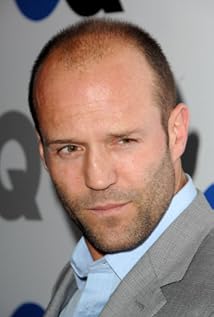
Image result for jason statham       Related image

Who is more noticeable?


One of the nicest things that a bald man loves to read is the news of some academic study or other shows that bald men are inevitably sexier. It’s especially true in Singapore as a portion of our economy is dependent on making bald men feel like shit for being bald (the one group of advertisers that never seem to have problems with the budget are inevitably the “hair restoring” companies.)
As someone who started losing the hairs on his head at an early age, I find myself in an interesting position when it comes to talking about being bald and the sex appeal of being bald. 

My problem being that as a child I had a good head of hair and sobbed whenever I had to go for a haircut. My heroes were inevitably men with a good of hair and the only people who got away with being bald were Yul Brynner of “The King & I” fame and to a certain extent, there was Telly Savalas of Kojak fame. My youthful hair loss wasn’t helped by the fact that my Dad, even at the age of 70, has a good head of hair and his initial reaction to discovering my hair loss was to send me to a dermatologist and to sponsor the Propecia pills (which stopped when I suggested that being bald but able to get it up beat having hair but impotent). Thinning hair at 18 wasn’t exactly good for the ego.

Having said all of that, things are changing. The number of “bald” sex symbols have grown (Think Vin Diesel, Dwayne Johnson, Jason Statham etc) and being bald in some cases can be fashionable. It helped that people who had more hair than me at 18, now have shinier scalps and while Dad no longer sponsors Propecia pills, he happily encourages me to get a fashionable hair cut – which I do, I go under the razor every month. Then, as my second stepfather (who happens to be bald) said, “Women still love you when you are bald,” and I probably get laid a little bit more than when I was in my teens.

So, as you can see from what I’ve just said, I should be an expert on whether bald men are sexier and so, here I am trying to answer the question of whether bald men really are sexier than the rest
I believe the answer lies in one of my Dad’s bits of unintentional wisdom when I started losing hair. He said, “Nobody notices when you are bald. Everyone notices when you are a comb over.” Baldness is like old age – you either embrace it or it embarrasses you.

Let’s go back to the first bald sex symbol – Mr. Yul Brynner, who actually had a good head of hair. However, when he stared in the King & I, he ended up gaining so many positive reviews for his shinny scalp that he made it a point to shave his head. Mr. Brynner exuded confidence in himself and that in turn made him sexy. Confidence, as they say – is sexy.

Mr. Brynner and his successors made baldness work for them by embracing it and making it part of their image of being “Men-Men” (as opposed to what Arnold Schwarzenegger calls “girly-men). You don’t have to be built like a member of the NBA to pull it off (OK, don’t be slob in your personal appearance) – you just need to be confident enough to go all the way. A shinny scalp shows the world that you’re not afraid of being who you are. Bald sex symbols are what they make being bald work for them.

At the other extreme are those who try to hide it. Comb overs are usually the most noticeable. In Singapore, we had the case of former SIA CEO, Dr. Cheong Choong Kong. For an ordinary person, being a comb over is merely bad fashion choice. However, when you are the CEO of the National Airline of a country that has made the National Airline an extension of itself …….things can get a bit painful. Dr. Cheong who is a brilliant business leader in almost every aspect of the word, didn’t get this. One only has to remember the “tragi-comedy” of the little strands of hair flailing in the wind during SQ 006, the crash in Taiwan. There we were trying to focus on enormous tragedy that had taken place and then, there were the few strands of hair dancing on Dr. Cheong’s head – I guess you could say this was comic relief to take our minds away from the tragedy.

Poor, Dr. Cheong. Here was mad who had done so much to make as a glowing meteor in the aviation market and yet, his inability to have confidence in his looks made him the butt of some less than tasteful jokes. Speaking as someone who spent his happiest years in PR, the only thing I can say is “Dude -you’re the CEO of SIA – who cares if you are bald?!”

As I bald man, I support the survey that says we’re better and sexier – but I do so with a qualification. You got to know how to be bald and you got to love being bald. Saying that the results are usually less than sexy when you try to hide being bald is being kind.  

Thursday, March 07, 2019

If it Sounds too Good to be True …….

I like to think of myself as an honest man, who would make a very poor crook. My mother made it a point to drill it into me and my siblings that lying and taking things that we shouldn’t take was not only criminal but morally wrong. She took great pride in the fact that on her side of the family, people, particularly her father, were “incorruptible.” She also stressed that it wasn’t her side of the family that was rich in moral fiber. She made the point of drilling it into me that my father’s family were also decent people.

Yet, despite the valiant efforts of my parents to keep away from the nasties in life, I’ve somehow run into more than my fair share of nasty people or as they say – the people who make a living exploiting the weaknesses in others.

Scams can take many forms. You could say that the China girls in Geylang, Singapore’s Red-Light district are running a scam, especially the ones who pick up an old man and somehow persuade him to spend his entire pension on them. You could also say that the street sellers trying to flog you second hand goods or the old people selling you tissue paper of the street are running a scam.

To a certain extent there might be some truth in the sense that these people are not working in conventional jobs. However, in many cases you got to salute these people who do what they do and their existence is in actual fact a blight on society as a whole rather than on the individuals doing the task.

If you look at who the “working girls” from third world countries “con,” it’s usually people who shouldn’t be easily taken in (especially older white men in senior corporate positions – or Chinese shop owners who in many cases have highly educated children who make up for their lack of education). If you look at the guys peddling fake goods on the streets, you have to credit them for trying to make a living no matter how “degrading” and how much “rejection” they face on a daily basis. I’d rather have these guys than the better educated ones who have too much pride to be seen sweeping the streets but have no problem mooching off the guys working lowly jobs. As for the old folks trying to sell you tissue paper – all I can say is what does it say about us as society that our old folks need to sell tissue paper to pay their utilities? 

Real scams are in many ways very respectable in appearance and the success of a “good” scam is the fact that it contains a high element of probability or at least the things that a reasonable person would assume are credible.

One of the cases I dealt with involved a man who worked on the principle of getting people to invest in “food production” through hydroponic farms, which is particularly appealing thing in land scarce Singapore, which depends on importing its food. In the 60s, the government was all about getting rid of farms to acquire land for housing development. Today, the government is investing in new technologies like vertical farming because the “talk” is about how we need to be self-sufficient and not be bullied by the outside world.

So, when the government, which to all intents and purposes is the most credible organization in the country talks about the importance of food security and technologies to create it, you’re a bound to think that a person talking about technologies to create food security is onto something.

Another example of a scam in Singapore was called “Profitable Plots,” which worked on the premise of buying land in the UK and waiting to be bought out by property developers. They were asking you to invest in the UK, the country whose laws are the basis on Singapore’s (I mean, it would have been a bigger challenge to sell land in Botswana for example).

Let us never forget that the 2008 financial crisis was not created by an obscure financial institution in Palau. It was created by the most credible financial institutions based in the most credible financial centres (namely New York and to a lesser extent London).

Good conmen always have an element of credibility. I make no secret that I don’t like Donald Trump the politician but as a “con-job” he’s going a fantastic job. He’s at the right place at the right time and whenever you see him, he seems to be living in vulgar luxury. Who am I, for example to question him when he declares himself to be a brilliant businessman? He’s living in the most outlandish suite on Trump Towers, while I struggle to pay my HDB housing loan. You have to give him credit for making you think that he’s doing something right.

A healthy degree of skepticism is always required when approaching an investment or someone who is telling you something that you are instinctively drawn to. The most common point that con artist hit on is your greed.

The scams that always seem to hit the mark are those that promise high returns. I live in Singapore where the average interest rate paid on a savings account is 0.025 percent a year, so anything that pays above on

Well, it sounds good – too good in fact. What people often forget is that great rewards are tied to great risk. Lotteries work on people forgetting about this inconvenient fact. The average Joe earning 10 bucks an hour and working 8 hours a day for six days a week gets excited about at the thought of winning several lifetimes earnings in an instant but forgets that the odds of winning the 5-number toto is about 1 in 2,330,636. By comparison the odds of being struck by lighting are around 1 in 3,000 in a lifetime. People buy tickets religiously in the hope that they strike it rich just once (religious buyers do win something from time-to-time – the win encourages them to buy more).

If something offers high returns, its likely that there is a “risk” to it. A gambling win pays off better than anything else but as mentioned, your odds of winning are very slim. The same is true of any other investment.

Then there’s the principle of understanding what you’re investing in. How many of us ask the vital question – what is this business about or how does it work. Warren Buffet, the world’s most successful investor has made it a point of never putting his money into anything he doesn’t understand. If you look at his investments like Coke or Gillette, you’ll realise they’re very basic and simple.

Most of us get too caught up in trying to be clever or we’re simply too afraid to be stupid. Hence, when someone says something that you think its deep and meaningful, most people will nod and say “Yes, I understand – that makes sense and its brilliant,” even if the speaker might as well be speaking a foreign language.

I’ve had to reach my forties to understand that its OK to be less than stellar smart and only doing things my limited intellect understands, helps. Let’s remember a small fact – Forrest Gump had a less than average IQ but did better than his more intelligent peers because he wasn’t afraid to be who he was. The clever guys end up getting screwed because they end up trying to be smarter than they actually are. Stick to what you know or find people with your interest at heart who know.

It’s heart breaking to see retirees lose their shirt to the “clever” things that have impressed them and appealed to their worst nature. Helping someone remember certain facts of life can save them a lot of heart ache latter on in life. 

Monday, March 04, 2019

Playing a Good Innings


India and Pakistan are perhaps the unruliest of neighbours. Despite being practically identical in every sense of the word (The spoken Urdu of Pakistan is practically indistinguishable from the spoken Hindi of India and as was often repeated at the Institute of South Asian Studies in Singapore – Delhi and Lahore have more in common than Delhi and Chennai), India and Pakistan can’t seem to get along. The inability of the South Asian nations is at best, fun for an outsider to watch (I confess to being glued to the Beating the Retreat ceremony at Wagah on Youtube, which can be found at:


This is easily the best display of macho-marching that is beautifully synchronized despite the fact that both sides are trained to kill each other rather than work together, and you have to consider this a compliment as I’m from Singapore where all our military does is to train to march.
Then, I should not forget that both these nations are cricket mad and a match between these was more entertaining than an England vs Germany football match (where the English would inevitably bring up World War II or the 1966 World Cup, being the last two events where they beat the Germans at). Funnily enough, the Indians that I used to get work from actually respected the fact that one of my cricket heroes was “Wasim Akram, one of the greatest fast bowlers around (it also helped that I openly support the great Sachin Tandulkar). You can see the great Wasim Akram and equally great Sachin Tendulkar at:


Unfortunately, the South Asian rivalry has a nasty twist to it. As one Indian Expat said, “Singapore and Malaysia have constructive competition – you build a port, I build a better one – you have an F1 race, I’ll make a better one, unlike India and Pakistan, where it’s a case of you have a nuclear bomb, I build a bigger one.” Ever since the South Asian nations got it into their minds to build nuclear bombs, the world has crapped in its pants at the thought of these two engaging in an all-out war.
The saving grace to this nasty aspect of their rivalry has been the fact that the Pakistanis are smart enough to know that they’d probably lose in an all-out war. In South Asia, India is by far and away the big elephant and everyone else in the region pays tribute to the biggest creature in the jungle. While the Pakistani Military wields considerably more power in Pakistan than the Indian military in India, the Pakistanis have lost miserably in every war they’ve fought with their much larger neighbor. At the time of writing, India spends five times more on its military than Pakistan and has four times more people in its military. A comparison of military strength can be found at:


To put it bluntly, Pakistan has better odds in beating in India on the cricket pitch than it does in a head-to-head military confrontation and the Pakistani Generals know that. So, what do they do? The answer has been to play a dangerous game of supporting terrorist groups who have it in for India. These groups have a way of making India uncomfortable but it gives Pakistan deniability. The Generals in Pakistan have also made friends with the only nation bigger than their rival – China (while China uses Pakistan to undermine India, the Chinese are also great capitalist and know where the bigger and more prosperous market is).

In the past, the South Asian neighbours have managed to find a way of pulling back from an all-out war. The international community has worked tirelessly to pull both sides back from the brink and the Indian side has usually shown the greater ability to control itself.

The latest one was slightly different for the simple reason that the Indian Prime Minister, Nahrendra Modi is facing an upcoming election. Mr. Modi, who won an election based on being a tough-no-nonsense competent doer. Mr. Modi is under pressure to get tough on Pakistan and the Jihadis who attacked Kashmir in mid-February of this year. Mr. Modi ordered the Indian Airforce to retaliate and sent jets to bomb parts of Pakistan proper. The Pakistanis did put up a fight and a plane was shot down. Anyone who remembered the Israeli shelling of Lebanon of 2006 over the capture of two members of the IDF would have thought that war was about to break out.

It didn’t and ironically, the person to thank is Pakistan’s newly elected Prime Minister, Imran Khan. Mr. Khan was Pakistan’s former cricket captain (lead them to a world cup victory against England – School stopped for the day) and a former playboy turned religious devotee, whose political career has been all about dealing with the awful corruption in Pakistan.

Mr. Khan declared that he would release the Indian pilot, Wing Commander Abhinandan Varthaman and he did so, but not after the Pakistanis managed to get a video of the Wing Commander praising his Pakistani captors for being professional. The Wing Commander’s release is documented at:


The move was brilliant. Mr. Khan, who is in some sectors of the Western media accused of being in the pocket of the Generals, showed himself to be an independent minded statesman, who was trying to avert a nuclear war. In short Mr. Khan, a “newbie” in the realm of international politics had, in a single stroke put the heat back on his more experienced Indian counterpart to show that he too was capable of doing the right thing.

What incident shows is that India suddenly has a different opponent to deal with. While, previous Pakistani leaders were either “corrupt” civilians (Both the late Benazir Bhutto and the previous Prime Minister, Nawaz Sharief had careers marred by corruption charges) or military men who were obsessed with fighting India. While politics in India is not known for being clean either, India has basked in the glow of being “the world’s largest democracy” and thanks to its IT boom, India is seen to have grown its economy into the modern ages while Pakistan languished in the feudal.
Not only was India in the stronger position militarily and economically but it had the better press, which only seemed to enhance its economic and military superiority.

However, things may change with Khan. Unlike his predecessors, he’s developed a reputation for honesty with the people and to a certain extent, his image is that of competence. His gesture of freeing the Wing Commander has given him a massive PR victory over his Indian counterpart.
The Indians are a little upset as can be seen in this news clip from the Indian media:


But it needs to look at other ways to deal with the issue rather than be “sour” about it. The world knows that India is the bigger power and so the world expects more of India than it does of Pakistan. The trick in dealing with Mr. Khan, is perhaps to make an appearance of trying to help Mr. Khan out in trying to make Pakistan a more prosperous place. Mr. Khan has even gotten better in his PR by declaring that he is “not worthy of the Nobel Prize” when the media in Pakistan declared that he should get one.

What can Mr. Khan do? Perhaps the trick is to somehow do something about what he’s promised. Mr. Khan has played the PR game masterfully but as every PR consultant will tell you – you need to have something to back up the message

Perhaps the area that Mr. Khan can make the most of things is to return back to his old career – cricket. It’s the one thing that both sides can agree on and what could be a better place to start by creating more opportunities for both sides to meet and play cricket. When people play together, the less likely they are to end up going to war. Sport helps people relive their rivalries without actually getting nasty (though English football has examples where this isn’t necessarily true).

I believe the cricketeer, could do wonders if he managed to build an entire relationship with the rest of the world around his old job.

Monday, February 25, 2019

We treat our staff like family around here!


By. Mr. Peter Coleman 
Director at Aegis Interaktif Asia Pte Ltd


How many times have you started a job, or even been for an interview and the CEO or someone of a similar level says "We treat our staff like family around here". It is of course a stupid statement to make for a whole host of reasons. You might hear other trite phrases like "My door is always open" or "We want our staff to cherish the leadership". None of this is backed up by any description as to how it is going to be achieved.
But it's the first statement that should make those little alarm bells ring in the back of your head. On the one hand it may feel to you that you are going to be welcomed into the family, sharing holidays, birthdays, anecdotes about the children or grandchildren, swapping photos from holidays and of your dogs and cats. However you may want to take a reality check and try and find out if their family actually like them.
Depending on the age of the boss or bosses and their children you might try and do some amateur detective work looking for Facebook and other social media sites to see if your potential new boss does actually have any sort of social media presence and if so how much his or her family appears in his or her feed. Now not everyone has Facebook and other social media accounts so you need to become an amateur sleuth and do your own investigations. You may find out that the children don't even like or live with the parents. You may find out there are some dark secrets lurking in the depths of the familial relationships. 
Certainly for me the next time someone tells me they treat their staff like family I shall probably feel very sorry for the staff and wonder what they did to deserve such bad luck.
The point of this story? Listen to the subtext of what is being said. Why would it be necessary for someone to make these kind of statements if it were in fact true and being practiced by the people making the statements. So if you hear these phrases "We treat our staff like family", "my door is always open" or other strange and inane utterances you should probably listen to that little bell ringing and make for the door and the next interview.

Friday, February 15, 2019

5 Anticipated Topics for the dreaded General Paper in 2019


Neena Godhia-Gunter 


Full-time Private Tutor Subjects: General Paper (A levels), English (Primary to Secondary)


Very often when it comes to the General Paper (GP) examination the focus is on Paper 1 and little is said about the comprehension passage or what to possibly anticipate.
From my experience teaching A level students, being more aware of current affairs and reading up on what is going on in the news is the first step in scoring for GP.
Here are some hot topics that have never been tested on in the comprehension section and are worth your attention.
1.      Climate change
Global warming and climate change are problems we face today. Even though there are sceptics like Trump, we do witness massive changes in the climate globally which raises many concerns and queries. Who is responsible and what can we do? Are we doing enough, and can the damage be reversed as suggested by Trump?
2.      Education and empowerment
Malala Yousafzai, is one prominent advocate of education. Through education many problems can be mitigated, and boys and girls can be empowered, yet twenty percent of young people in developing countries fail to complete even primary school education. Why is this the case? How can education bring people out of poverty?
3.      World Hunger
With the developed world getting richer and many developing nations growing, many are still left behind in the world. Some 795 million people in the world do not have enough food to lead a healthy active life, which is about one in every nine people on earth. Can this problem be solved? What are some solutions to bring about a fairer distribution of the necessary resource?
4.      Globalization
With globalization comes not only economic growth but challenges. Today there is an unprecedented movement of people that many nations are not equipped to handle. What policy changes are needed for smoother integration of immigrants? What consequences will there be on people, families and world economies if more nations adopt protectionist policies?

Instead of just reading the news wholesale challenge yourself by thinking out of the box and questioning whether any facts presented in the article sit well with you. Remember there are always two sides of the coin and the more compelling arguments you can present in your general paper, the more likely you can score.
Keep reading and good luck!

Friday, February 08, 2019

You don’t need a fashion model to sell your clothing brand…

credit to cartoonstock.com
Since I started my own agency I’ve had the opportunity to meet countless talented business owners who know their brands inside out. Whether its in F&B, tech or an area as niche as semiconductors, you would expect that the experts in these respective fields would choose to work with an agency that knows their industry inside out correct? Not quite.
While it does stand to reason that a marketing expert hailing from the same industry as the client or one who has serviced the majority of clients from a similar industry it would be a right fit, understanding does not always translate to selling a product or service.
This is where I find that many clients can to lose the plot when selecting agencies for their brand. They usually tend to focus on agencies that are ‘industry’ experts in fields like F&B or Tech by default while losing sight of the big picture on the objective of their campaign and who exactly they need to sell their product or service to.
The whole purpose of selecting an agency is not about whether they are experts in your industry, but if they are experts in marketing products/services similar to yours. Take for instance a car brand like Volkswagen, would they hire an engineer to market and sell their cars? Yes and no. They would be consulted of course on which USPs to highlight, but the marketing team needs to come up with a strategy that would appeal to consumers in terms of designing the brochures or types of consumer events. So, in other words an agency needs to be somewhere in the middle - to have some knowledge of your industry, but first and foremost how to formulate a marketing strategy that reaches the right target audience.
Don’t get me wrong. I’m not advocating to hire a tech agency to publicise your new restaurant menu (unless it’s an AI restaurant 😉), but maybe what clients need to do before they make a decision is take note on these few things:
1.     Don’t just look at the list of clients are under the agency’s portfolio. Find out how they have serviced them
Depending on what your objective is for your product/service finding out how an agency executes a campaign will give you an idea of how creative they are. At first glance big known brands in a portfolio may seem impressive until you find out how they were serviced. For example did they just draft a press release and send it out via a newswire or was there a creative campaign done over a few months? If you are looking for an agency to just write press releases and send them to a bunch of media to ‘get the word out there’ then there’s no point in paying for an expensive one. Ask for case studies that show how certain issues were resolved and the strategy used to achieve their PR goals instead of just looking for brand names.
2.     Don’t get fooled by ‘celebrity PR’
Everyone falls for a pretty face and thinks it ‘can launch a thousand ships’ but once those ships are launched what’s the next step? There are some agencies that ride on a representative that’s always featured in the media, has a million followers on Instagram or was an ex recording artist that’s been on the Billboard countdown. But really if that is all it takes, why doesn’t Beyoncé have her own PR agency or be her own publicist? What you need to know is that this ‘superstar’ is probably not going to be servicing your account or might not even be seen at meetings. Now if he/she manages to get a few big features in the press for you because of contacts, that’s swell if you have short term goals. But ultimately the success of your PR campaign depends on a team running it over a period of time and the experience they bring to your account. 
3.     Realise that you will never find a PR expert that understands your industry 100%
Unless you clone yourself and get him/her to work in an agency for 5 to 8 years, you will never find anyone else with the same knowledge of your industry in the PR field as you. In my career I’ve had the opportunity to do PR for Swiss watch brands that have mechanical complications as complex as an Einstein equation but I’m no rocket scientist. The role of the PR expert is to extract the important bits from all the industry jargon and tell stories that appeal to consumers and the press to push your brand forward. 
4.     Know your objectives
Many clients seem to know what they like, but have no idea what they want. Having this approach with any agency is the beginning of a tumultuous relationship with no happy ending. Before you meet an agency its good to have a rough brief on what you want to achieve and who you would like to reach out to. The role of the agency is not to tell youwhat to do but to advise you. You don’t go to a banking consultant with 10 million dollars and ask him/her if you should invest it in their bank do you? Having a brief with clear objectives in mind will also help you to decipher on the type of agency you might be looking for. This exercise also helps in managing your budget and not paying for services you don’t actually need.
The bottomline is to remember that you need an agency that is good in what THEY do and not necessarily what YOU do. Ultimately that’s the whole point in hiring experts which is to do necessarily something outside of your skillset. Otherwise what are you paying them for?

© BeautifullyIncoherent
Maira Gall