Tuesday, March 20, 2018

The Insecurity of the Majority


When the Oaf in the White House got himself elected two years ago, many people said it was because he appealed to a sense of “Empowerment” to a group that is supposed to be the top of the proverbial food tree – the white man. The Donald spent an entire campaign taking cheap pot shots at the groups that do work such as Mexicans, women and the disabled and the so-called masses lapped it up. Finally, here was someone who was speaking about the suffering of the “real” people and not giving a damn about the so called “political correctness” that had caused so much suffering to the “real” people.

As awful as the Donald is, I allowed to be a form of amusement. I actually felt that somehow, we in Singapore, are little bit better. Sure, the different races take a few pot shots at each other but when push comes to shove, we are all Singaporeans. I think of the curry incident, where Singapore Chinese joined their Indian brethren, after a family of China-born migrants made complaints about the cooking of curry.

My faith in “my” people was a little shaken today when I read the comments of a post by a Singaporean of Indian decent who had a very nasty encounter with a woman who didn’t think twice about going down the racist route. The posting can be found at:  


The story is disturbing in itself. At the very least, the woman in question should have been shot for being stupid. When you work in customer service, you don’t go out of your way to insult people because you never know who is going to be your next customer.

Leaving aside the nature of the post, what I found particularly disturbing, was the comments that people left behind. OK, there was some optimism in as much as the majority of comments were sympathetic to the guy who posted the post.

However, there was a small minority who didn’t get the point. One even went as far as to call the poster, “Just a driver trying to blow shit up,” and then said his experience wasn’t “racism.” Another chap described the incident as “The tone might be inappropriate, but expecting everyone to be PC in everything? Really?” – That was incidentally from someone who couldn’t understand why people with dark complexions get upset when their darkness is used against them, because white, yellow and brown people apparently don’t get upset when their whiteness, yellowness and brownness is brought up.

When I posted something about how I’d have sacked the woman in question, someone actually posted that I would never make it into management because I didn’t protect the staff from “an allegation becos of doing her duty.”

While those posting were thankfully in the minority, I find myself asking, are we, the majority (I am ethnically Chinese, which means I’m part of the majority of Singapore’s population), forgetting that just because someone is of a different ethnicity or culture, it doesn’t mean that their complaints are not valid.

I question whether the Chinese Singaporean is starting to feel the same pressures that the White American was supposed to be feeling – namely, the fact that you’re no longer the dominant species?

I do see inter-communal tensions. Since I deal mainly with Indians, I see it most in the Indian communities, where our local Singaporeans have woken up to find themselves competing with people from India who happen to be as well educated or if not more so than they are. Hence, you get the local Indians complaining about the “snooty” expat Indians with “fake” qualifications and you get the other side, which basically thinks the majority of our local Indians live in two-room HDB flats.

I also see it in the Chinese Community, where the term “Chinaman” refers to the roughest and crudest of people. Our local Chinese girls are also finding it harder to compete with better looking and more stylish women from the Mainland. I remember one of my female acquaintances verbally expressing the idea that every girl from China was an AIDS factory. I also had a girl friend from China who thought that Singaporean Chinese girls were not pretty because they came from the wrong part of China (roughly translated – We, China girls are from Beijing and Shanghai, so we are pretty – Singapore girls are from Guangzhou and Fujian – so less pretty. My Aunt’s only reply was “OH FUCK OFF.”)

However, I’ve not seen much tension between the races. While there are jokes amongst the Chinese about the Indians being “black,” but by and large, inter-racial relations in Singapore are pretty good. So, I’m kind of surprised that there are people who are expressing sentiments that can be summed up as “Ohh stop whining, you’re lucky to be in our society.”

Seriously, Singaporean Chinese are in no danger of being displaced on the top of the socio-economic food tree in Singapore. All you have to do is to look at the higher echelons of any government organization (especially the military), and you’ll realise that the Singaporean Chinese is not in any danger of being shut out of the plum jobs. Having said that, I guess you could have said the same thing about the White American man. Obama was only half a black man who ran the country through a cabinet that was predominantly of Caucasian decent and somehow, it seemed that the White man felt left out and disempowered enough to vote for Trump and his bashing of people who do work.

I’ve had Singaporean friends tell me that they can’t hack it in Singapore because its getting expensive and the foreigners are to blame. I’ve heard the same thing from Europeans and Americans. The world is becoming different and old socio-economic patterns are changing and while I believe that this is something that should be celebrated, it will leave people disenfranchised.

In places like Detroit, you had a car industry that kept working class white people in decent paying jobs. Then, the car manufacturing went to places like Japan, then China and dare I say the robots are also moving in. For the working class white man, it can be very unsettling when the thing that gave you a good living goes elsewhere.

Likewise, in Singapore, the average Singaporean had a perfect niche between East and West. As one Singaporean British Airways Steward said, “They used to hire us because we spoke English and Mandarin. Now, the PR Chinese are learning English, so the airline hires them instead.”
As painful as it is, this disruption is a good thing. It forces one to use ones’ wits and think of different ways of survival. You got to think of doing things better when you don’t have the advantage of incumbency.

I don’t see why the Singaporean Chinese needs to feel threatened in his homeland. We just need to accept that things are changing and we got to find new ways of doing things. You can’t fight it and we have to acknowledge that our friends from ethnic minorities have their special value too if we want to progress in a changing world. If you can’t recognize someone because “ALL Of YOUR ARE SO BLACK,” then you might want to consider migration – to Mars.

Monday, March 05, 2018

Let’s Go Easy on Loudmouths


I’m going to do something very unusual – I’m going to be nice about the oaf occupying 1600 Pennsylvania Avenue. I’m going to be nice about him because despite the crap coming out of his mouth, the guy merely a “talker” rather than a doer. As was brilliantly said in the classic series “Yes Minister,” – “Always deal with the difficult part in the headline.” In the oaf’s case, it’s a case of say it – say it even more loudly and if necessary put on a show of actually doing something but not actually doing it or doing it in such a way that the powers around you manage to stop you.

Take everything he said about China as an example. On the campaign trail, he couldn’t stop talking about how he was going to punish China for “raping the American Economy.” Once elected, he made a few noises and raised a tariff or two but the moment President Xi Jin Ping stood in front of him, the Donald was like an obedient school boy eager to please the Principle, even going as far as to bring out his granddaughter to sing for President Xi in Mandarin. A clip of Ms. Kushner speaking Mandarin can be found at:


I bring out the example of the Donald and his management style because life is filled with little Donald’s who believe that the way to be tough is to look like you’re tough. I’m not saying that these guys are duds. As is often said, they had to have done something right to get to a certain position in life. However, they are, more often than not, the type that only get so far because they can’t help themselves from living on bullshit and anyone with half a brain, a cool head and half a testicle quickly understands that this is often the easiest guy to deal with as long as you can live with the amateur theatrics.

Donald Trump is a wonderful example. In fairness, he actually had the brains to ensure he was born into a well to do family and somehow, he always made sure that Daddy was willing to bail him out whenever he got into the shit (It’s a skill – well to do Daddy’s didn’t get to where they were by being stupid and quite often they are hard on their own flesh and blood). The Donald eventually built a moderately successful business by bragging about how great he was (Seriously, who sues Forbes for ‘underestimating’ his wealth?). Somehow, some smart people bought into the hype and helped him move up without actually looking at what was behind the hype.

As much as I remain stunned that he actually got voted into the White House, I have to credit the Donald for doing something right to have tapped into something that compelled otherwise decent people to want to vote for him.

Having said everything that I’ve just said, there’s one fatal flaw to the man – there’s actually nothing beyond the hype. I think of the people who voted for him because they thought he was going to bring his business brilliance to running the country. Well, they’re partially right, he’s running the country exactly the way he ran his businesses – in a totally disorganized manner with no inclination of competence. In the year that this administration has been in power, they have only passed ONE bill despite controlling both houses of Congress and most of the governorships. He has bungled things that a mongrel could pass with flying colours (Denouncing Neo-Nazis) and his White House has lost staff faster than Usain Bolt on speed. This is the only administration that has gotten itself investigated within a year of being in office (By contrast, it took Bill Clinton 5-years for the Lewinsky scandal to come out and it was a similar time frame for Ronald Regan and the Iran-Contra Scandal).

You get away with being undisciplined in businesses because most businesses are small enough not to matter. The Trump Organisation is private organization that manages to be private enough for people to cover up the obvious holes. The White House is a different matter – your every move or your every failure is a matter of public knowledge.

The Donald, as they say, is only an example of a leader who got there by hype. As much as one should want leaders who are more deserving, these are perhaps the easiest characters to deal with. They usually have an obvious weakness – huge egos. Stroke their egos and they actually end up being quite easy to manipulate.

Once again, look at where Donald Trump has had the most success in his foreign policy. He’s managed to piss off traditional allies in the Western World who face similar public appearances that he does. Did he expect Emmanuelle Marcon to let him crush his hand for the television cameras? The French would not allow their President to be seen to be bullied by an American. Neither would the Germans allow Angela Merkel to look like Trump’s patsy. Even the British, who have traditionally toed the American line have actually cancelled a State Visit.

By contrast, Trump has done very well with the Saudi Royal Family. It should be noteworthy that his first trip overseas was to Saudi Arabia. Despite slamming President Obama for bowing to King Abdullah, the Donald actually curtsied for King Salman. A video link can be seen below:


It should be noted that the Saudi’s flattered the hell out of the Donald and reaped their rewards. The curtsey for King Salman was a very small price to pay for promising to buy billions of dollars-worth of American hardware. They saw it to it that Trump would be flattered at every moment he was in the Kingdom and the Donald loved every moment of it. A video of his tour to Saudi can be seen below:


Saudi Arabia flattered an ego in need of flattery. In return, the Saudi’s got him to curtsey before King Salman and more importantly, the Donald has come down hard on their Shia Rival across the Gulf, Iran and ignored their war in Yemen and he’s barely battered an eyelid over the blockade of Qatar. Despite coming into power on the promise to ban migration from Muslim countries, Saudi’s remain able to travel freely to the US of A.
The Chinese have also understood that flattery and appearing to kiss arse without actually coming near the proverbial behind works wonders. President Xi never seemed annoyed by the Donald’s comments on labeling China a currency manipulator. The Donald may blabber on about this and that, but the President remains calm and smiles politely:

The Chinese have made it a point of being very hospitable to the Donald. An example of the hospitality extended to the Donald can be seen at:


Somehow, the man who had it in for China and Chinese raping of the American Economy cannot help but gush over his Bromance with “President Xi.” Let’s put it this way, would you expect an American President to endorse the Chinese President lifting term limits and allowing himself to stay in power indefinitely?

Why have leaders from autocratic systems found it so much easier to get along and get what they want from the “Leader of the Free World,” than those from fellow democracies?

One could say that the Arabs and the Chinese have had centuries of learning the art of court intrigue, which the Europeans have not. Then again, that’s not quite true because European history is filled with double dealings – just ask any Pole about what happened when Adolf and Joseph screwed them up.

Perhaps it could be the fact that in a democracy, leaders have to appear to do what their subjects want. The British, French and Germans, expect their leaders to have some sort of public image that goes beyond money and power on the international stage. By contrast, a leader in autocracy merely needs to ensure that the subjects feel well taken care of not to rebel. Hence, King Salman and President Xi can tap into the Donald’s weak spots – namely money and power.

Which then leads to the next awful thought. Perhaps the Chinese and Saudi’s have something that makes the Donald think twice before doing anything stupid – namely the fate of the Trump Organisation. – Who is to say that King Salman didn’t politely hint to the Donald that there are Saudi Princes with money to spend on units in Trump Towers? Who is to say that President Xi didn’t suggest to the Donald that US policy might have unfortunate consequences on potential expansion plans in China. We will never know.

Loudmouths and braggarts can be exceedingly annoying. They can be painful to deal with, especially when they happen to be in positions of power over you.

However, if you understand what they want and if you have the ability to flatter on one hand, dangle a bribe on another and ensure that they understand that the hand currently stroking the testicles with tender loving care could turn into a vice like grip, then the loudmouth and braggart will find a way of giving you your long term objectives.  

Thursday, February 22, 2018

Let's Get them To Work

I’m generally “pro-immigrant.” Growing up in the UK and living in Singapore for the last decade or so, I noticed that it’s usually the migrants from elsewhere doing the backbreaking work and the down and outs are usually the native born. In London’s Soho district, the tramps were inevitably young, white, native Brits. The “Pakis” were too busy running corner shops and the Nigerian black boys would hustle to get you into a mini-cab. Now, that I live in Singapore, I notice that the construction sites are inevitably staffed by Indians and Bangladeshis, restaurants by Pinoys and Indians and our streets would not be clean were it not for the “Bangla’s” picking up after us.

I have argued time and time again that were it not for migrants who are hungry and willing to do shit jobs that need to get done, many of the great cities of the world would probably collapse. I also don’t see the sense in denying the job to the guy who wants to do it because he’s “not from around here.” I also don’t see the logic in denying the guy who wants the job in name of giving the job to the guy who doesn’t want the job in the first place.

Having said that, I also believe that many societies, particularly in the developing world, need to find a way of creating opportunities for their native-born citizens and as much as we want to encourage people to succeed, we also need to take care of the “losers.” Letting people die on the street doesn’t get anyone anywhere. The social order that allows people to prosper can easily be upset if enough people feel their getting screwed by the system.

Image result for London Tramp
If only this chap would learn to be like

In the Western world, they have the welfare state, which works on the premise that the state provides you with a safety net in the event that things turn sour for you. The Nordic Countries are the world’s favourite example of what a good social system can do for you. Losing your job or getting sick in Sweden, Norway, Denmark or Finland isn’t the end of the world because the state will step in.

However, while the intentions behind the welfare state are noble, the system, as many Western Countries have found out, has one intrinsic flaw – the value of work vanishes. Why do you need to go to work if people are giving you money for doing nothing? The system becomes open for abuse and unfortunately the people who should be working find a way of not working. The system becomes even more ridiculous when you have situation where people from elsewhere get the “benefits” without paying into the system. The “anti-migrant” group has moved its pitch from “they take our jobs,” to “they are coming to live off our tax dollars.”

Many Asian countries balk at the thought of implementing a “welfare” system based on the Western model. Singapore, is a good example. Lee Kuan Yew, our founding Prime Minister and the last great Victorian Gentlemen this side of the Suez Cannel felt that the “welfare” system had turned the British from being the most civilized people on earth into a bunch of hooligans. His successor had to disguise the giving out of cash to the citizens by calling them shares.

While the “evils” of the welfare system are known, Asian societies are reaching the stage where some form of “welfare” system needs to be introduced. The richer Asian nations like Singapore and Japan are aging. Modern life is such that old social contracts are no longer viable (In my mother’s words “Can’t expect you to look after me when you can barely look after yourself.) What can be done? It’s a question that needs to be answered quickly as societies age.

Image result for Bangladeshi Working as a Cleaner
These guys

In Singapore, the answer is called “Workfare,” where the government donated cash to low wage earners. I used to enjoy receiving “workfare” every three months. It was like a surprise package and there was the greater thrill of receiving money from the government.

The idea of workfare is right in as much as it gives one the incentive to work. As a former recipient, I can say that I was encouraged to stay in my job as a waiter because I’d get that buzz of having that “government-given” bonus. Workfare, which is assessed on a quarterly basis, meant that I could get a larger bonus from the government if I stayed in the job.

Generally speaking, I like the principle of the system. There is a possibility of abuse in the system but even then, the it is correct to pay people to work not to do nothing. Our problem in Singapore not so much people abusing the system but not wanting to abuse the system. As one of the characters said, “It’s not worth it for a few bucks.”

I have a sentimental attachment to my job as a waiter because it helped me move things along in life. While, the pay was never great, it gave me the stability of income that I needed to settle a few things.
I’m an unusual case in as much as I’ve grown attached to my blue-collar existence. To me, it was a simple case of a low income being better than no income at all.

However, there remains a portion of society that would rather not work a low paying job and live of friends and family. I think of the various characters I know who don’t have an issue being seen to be drinking all day but can’t afford to be seen in public cleaning the streets.

What do you do? Yes, I am for the principle of hiring the guy who wants the job rather than the guy who doesn’t want the job. However, can we really afford a situation where you have lots of people from elsewhere doing the jobs but a load of natives not earning a living?

I’m reminded of a report that I saw on Facebook, which reported that farmers in the US are having to leave fruit to rot ever since Donald started clamping down on migration. A friend of mine who supports the Donald made some comment about time to get people off welfare.

He has a point. We argue that migration is necessary because we need people to do the dangerous and dirty jobs that the natives won’t do. However, we have natives who are physically able to do the jobs but are unemployed and not earning a living. In the Western World, many of these collect welfare checks and lose the incentive to work. In the Asian Societies they live off family and friends until they no longer have family and friends and in which case they end up on the street. Isn’t it correct that you get the natives working so that there’s less need for migrants?

One of the areas to start is to make dirty and dangerous jobs less so. Technology is a big factor in things. At the restaurant I work at, we’ve adapted wireless payment systems, which reduces manpower costs. Instead of hiring a cashier and plonking paper chits around, we take the order on an iPad, which goes straight to the kitchen and the cashier. Instead of relying on a cashier to key in your orders, you merely print out the bill at the end of the meal.

Paying less than slave wages also helps. There is an argument made in Singapore that wages for certain jobs are too low for support a family (even if KNN and Pundeks don’t support their families). But there is a point in that, you cannot keep wages stagnant while increasing costs. Yes, I’d work a job far away from where I live if I had to but I’d also feel pretty resentful of rising transport costs when compared to my stagnant wages. So, to a certain extent, the employers need to do something to reduce costs for their employees. You could grow competitive mini-bus systems and a “night economy” if employers threw in things like transport.

I also wonder if things like a jobs program would get the down and outs to work? While “jobs programs” don’t have a great history of creating real economic value, they are better than the alternative of nothing at all and giving people money for nothing.

Surely, instead of having to rely on people from elsewhere, a nation should squeeze its productivity from its own citizens first. There are of course, barriers to this. Why, for example, should a city dweller (where a good portion of welfare recipients live) go out to work as a farm hand in the country when the investment in time and money might be a disincentive to work?

This is the point where governments need to get creative and figure out how to work with the private sector to share funds and idea on how to get people into work. Perhaps, a national job bank could be created and anyone who wants to register for social assistance, will have to register at the job bank. Businesses can then draw upon the job bank whenever they need labour, paying costs for employing the worker with the government helping subsidise things like transport to the work place and perhaps training schemes to make people employable.

Just letting people die should not be an alternative but giving people money for not working is not good either. The answer lies in making seasonal work in various labour intensive industries accessible to anyone who needs a job. My stepfather once said that if he couldn’t work as a doctor, he’d work in the harbor rather than take the dole. For me, I keep my job as a waiter because it’s a form of social security. Governments and businesses need to ensure that people will want to work and not take handouts.

As has been pointed out, people with jobs, even low paying ones, tend to have dignity, while those who don’t have jobs, tend not to have it. A dignified population is what most societies should aim for.


Monday, February 12, 2018

From Special Forces Warrior to Successful Businessman

I wanted adventure, so I joined the US Special Forces - Little Did I Know it would Train me for an Adventure in Business 

Managing Partner of DTNVenture Partners and Former Green Beret Medical Sergeant  

From the age of ten years of age I had a desire to become a ‘Green Beret’ watching the John Wayne movie of the same name over and over again. My uncle who I adored also had served as one in Vietnam being wounded on two separate occasions. So during my senior year in high School I signed up to join a Special Forces reserve unit in my home State of Ohio. At the time the only slot available was ‘Parachute Rigger’ I didn’t care I was in!

That summer I attended basic training after which I began my freshman year at Ohio University. I was scheduled to attend Airborne School over winter break and that fall I trained with a vengeance. I was also pledging Beta Theta Pi which added another element of excitement to that fall quarter. Airborne School was the adventure of a lifetime. I loved the long runs, the adrenalin and the Esprit that I was first beginning to see and understand. After graduating that winter class I headed back to school and over the course of several years I attended as many schools as I could to include Rigger, Jumpmaster, SERE and finally Special Forces Medical Sergeant 18 Delta Q course. Oddly it was Rigger school where I first had my interaction with other members of SOCOM as there were SEAL team and Force Recon members in attendance and we created a common bond.

At the time I was really checking the boxes as I had plans, post-college and in 1990 there was not much going on i.e. globally. That summer I was accepted to Graduate School in Belgium. I had just started school when I received orders that were actually faxed to me for Desert shield/Desert Storm. For me it was the adventure of a lifetime, so I boarded a train and headed for Germany and 10th Special Forces Group. Our mission was to support the Kurds and I loved every minute of it.  The war and mission were over in six short months and to be honest I have never seen the intensity or made the sacrifices that my brothers have made.

That being said the entire experience taught some very important concepts vis-à-vis business.

  • ·       Keep focused on the mission/summit, you may need to alter the route and approach but do not lose sight of the summit
  • ·       The right team is critical, my biggest mistake was believing that all individuals had the drive and passion of those in Special Forces, they do not!
  • ·       Failure is part of life, the question is what do we learn from failure and how quickly do we get back up
  • ·       Creating a new venture is not a sprint, it is a long hard slog and anyone that tells you otherwise is full of BS
  • ·       Quitting is not an option, and that there is a big difference between quitting and failing! 


Friday, February 09, 2018

From the Battlefield to the Boardroom

Experience in the Military is the Best Training an Entrepreneur can have.

By, Mr. Christopher Lo, Founder and Executive Director of iAdD Pte Ltd and Former Senior Lieutenant Colonel Singapore Army and Graduate from the Class of 1995 from the United States Military at West Point 


After serving almost 24 years, I chose to retire early from the military in August of 2013.  That decision was the culmination of my journey recovering from the decompression following my tour of duty in Afghanistan.  During this one particular bout of internal combat when I questioned my own mortality again (some call these episodes, the “Survivor’s Guilt”), the dots just connected. 

In that defining moment, I learned two things about myself. 

First, things always happen for a reason! From that day on, I shifted from asking myself “Why?!” to “Why not?!”.  By embracing this new mindset, I learned to go with the energy of “Yes!”, in the belief that my choice will take me where I need to go or receive the experience I need to feel.  The reason for the choice will appear when I am ready to receive. In a way, you can say, entrepreneurship is about having faith.

Second, there is an inexplicable push propelling me to be an entrepreneur.  It took over 20 years for me to realise how the West Point Experience and the ideals of Duty, Honor, Country, had suppressed who I was.  With this acknowledgement, I made the hard decision to walk away from the soldiering, the only profession that I had ever known.  Having survived at least two near-death experiences in Afghanistan, I thought what could be as challenging or worse, right?!

I am into my fourth year as an entrepreneur.  I realise now how wrong I was. Combat stress and business stress are simply two different worlds.  Yet, upon reflection, this Monday morning, I am clearer that the military experience has given me the best preparation to succeed as an entrepreneur.  Allow me to share the four attributes through the acronym FIST.

FIST stands for Focus, Initiative, Service, and Trust.

All startup entrepreneurs go through similar phases of experiences.  We first learn to work in the business. This initial phase teaches us to handle all aspects of operations to survive the business.  Next, we learn to work on the business. This second phase teaches us to put in place the business system and the management team to sustain the business.  We finally learn to apply strategic planning to scale the business for growth.  I now elaborate how FIST works for you.

In those early days of starting up, you are extremely resource poor.  Survival consumes all of your energy. Naturally, your military training instinctively Focuses you on the mission (to survive), which channels your efforts to take actions that generates revenue, and to ruthlessly shutout everything else.  In your hunger to generate revenue, you seize the Initiative to create opportunities and make things happen instead of standing still and waiting for things to happen.  It is here that you take calculated risks to experiment, test, and innovate.  Yet, you know these actions alone do not create the outcome you seek.  Your military training to perform actions in service of a higher intent, now kicks-in to sharpen what you do in Service of the customer.  Relentlessly, you ask: “What else can I do for you?” Because you have served, you epitomise trust and teamwork. Honed from years of daily practice in leading soldiers, your leadership by example eventually instils that Trust in those we serve.  Ultimately, your success is predicated on you being – who you are. “Never settle!”

The only thing that limits you in your transition is your military mindset.  The business world operates on the extreme opposite of what you have been conditioned to operate under. Hence, the crucial first step required of you is to unlearn to relearn, rearm, and reset your mindset. 

I want to encourage my fellow veterans, regardless of race, language, or religion: “Fear not, when you transit. Your military experience has given you the best startup preparation to step-out and step-up to the entrepreneurship challenge.  You already paid it forward when you served your country to now succeed as an entrepreneur. FIST will guide you to deliver on your dream to make the Positive Difference in service of others, beyond the military.”

So here’s my FIST pump to you, military veterans.  Thank you for your service.


Monday, February 05, 2018

3 business lessons I learned from running my own firm for 24 years

By Mark Goh
Managing Director of VanillaLaw LLC
First Published by techinasia.com
I have been a lawyer for nearly a quarter of a century and have spent most of those years running my own firm. Like any small-to-medium enterprise (SME), I struggled through the very basics of building and operating a business—figuring out and building my firm’s corporate structure, defining my value proposition, identifying my customer segment, and planning my finances. (For these basic lessons, I recommend using Alexander Osterwalder’s Business Model Canvas.)
I realized pretty early on that I was in a very unique position where I straddled two different worlds:
  1. The world of a lawyer
  2. The world of an SME business owner
I have been blessed with many insights over the years, and I wanted to share three of the most important ones.

Founder’s myopia

In Bill Gates’ book, Business @ the Speed of Thought, he references an old business joke that goes, “If railroads had understood they were in the transportation business instead of the steel-rail business, we’d all be flying on Union Pacific Airlines.”
As business owners, we sometimes become too focused or protective of our “babies;” we hang on to that first successful iteration of our business and refuse to innovate, expand, and keep up with market trends. We need to keep our minds open to be able to see the possibilities.
Earlier in my career, I invested in a company that conducted boat rides for wakeboarders (this was when the sport was gaining popularity in the country). The demand was so high from wakeboarding enthusiasts that the owners were not able to cater to other types of customers.
No one ever thought about attempting to capture the waterskiing market even though there was obvious demand. In the end, the wakeboarding craze died down, and the company folded.
Perhaps if the business owners looked beyond wakeboarding and recognized that their business was about supporting various water activities instead, they could have planned and executed a more flexible and sustainable business strategy.
My own product, VanillaLaw Docs, was designed as a legal document assembly software to help SMEs reduce legal costs and streamline the legal process. However, I have come to realize that the software can also be effective in industries outside of the legal industry. One such example is in the field of publishing, where companies that need to quickly assemble and print annual reports or assessment books can possibly use the software to organize and customize their print jobs.
These types of realizations are important because without them, we would continually operate in a limited space, unable to break out of the “trap” we created for ourselves. A simple way to avoid this trap is to always keep updated with the developments in your chosen and related industries and dedicate time (e.g. quarterly/biannual meetings) to review your business processes and strategies with your team.

Reexamining relationships

I used to be quite wary of the notion guanxi (roughly translated as relationships or connections) and have even written about the subject in relation to how SMEs conduct business. In essence, the culture of guanxi leads people to ink deals based on verbal agreements and trust instead of proper legal procedures. I’ve had several clients who’ve come to me with problems as a result of this.
I now believe that it is important we take the time to constantly assess and evaluate the way we interact with our business partners and clients and learn to integrate styles that combine both guanxi and proper legal procedures.
The current business environment demands that we communicate and relate to others in multiple fashions across multiple platforms. Engaging with our customers (and with business partners as well) requires a mix of technology and a distinct “human touch.”
We have to be able to attend networking sessions and genuinely make the effort to connect but also not shy away from platforms like Facebook, LinkedIn, and even Instagram, if that is where our target markets congregate. With our clients, we have to be dauntless and learn to be graceful in bringing up the need for proper documentation even if the client might not see the need for it.
Of course, necessary investments should be made to acquire sound multi-channel capabilities. If it means enrolling in a course to learn how to integrate social media platforms with your business, do it; if it means investing in a customer relationship management software to organize all your client information, do it; if it means calling a meeting to get everyone’s input on how you are as a manager, do it.
These are some examples of how we can reexamine ourselves in order to redesign our relationships with our clients, partners, and employees.

Investing in your future and future-proofing your investments

What’s usually discussed on this topic are things like incorporating technology into your business, making strategic financial decisions, and getting the necessary legal protections. While these are fine, something supersedes all of them: talent. Finding the right business partner, employee, or investor who understands and aligns with your vision and mission is a future-proof investment.
The key thing you’d want to look for is the quality of self-awareness. According to an article on Harvard Business Review, self-awareness leads to “more effective leadership, more satisfied employees, and in turn, a more profitable business.” People who are self-aware are more likely to be open-minded, communicative, and willing to learn and improve.
Recently, I have begun to incubate a business team in a sister company. I’m fortunate that those in my team are self-aware enough to seek out answers when they are lost, look for help when they cannot do things on their own, and most importantly, have the courage to share with me their honest opinions. While some will attribute this to their domain experience, I think it is their self-awareness that makes all the difference.
How about you? What lessons have you learned from your business journey? How can these lessons help you improve your business in the coming year?

Friday, February 02, 2018

Thank God for Shitholes!

You got to thank Donald Trump for having a unique ability for coming up with delicious sound bites for journalist. The occupant of the Oval Office set of a storm of protest and howls of anguish when he allegedly complained that the US was constantly getting migrants from “Shithole” countries like Haiti and much of Africa. He is alleged to have added salt to the wound by asking why the US couldn’t get migrants from Norway.

The left wing complained that the Donald was being a racist crack pot by insulting countries that are predominantly inhabited by black people and wishing that migrants were whiter. The fact that Donald has some racist tendencies should surprise nobody and the fact that he’s willing to exploit the inner racist in everyone should be no surprise either. The Trump supporters took the opposite view that Donald was merely expressing what every White American feels, namely the fact that America needs to get a grip on its immigration.

Both sides miss the key point. Donald is not incorrect when he describes certain countries as “Shitholes.” If the countries that he mentioned were not “shitholes,” they wouldn’t be producing people who are obsessed about leaving. It’s common sense – people do not leave countries which they believe offer them opportunities to prosper – they leave countries that they believe are screwing them merely for committing the simple sin of getting up in the morning. Haiti and much of the African continent produces immigrants who are desperate to leave because life for the majority is pretty shitty and the leaving is considered an opportunity for a better life. Norway does not produce migrants because the people are so well taken care of, there’s simply no need to try and make a life elsewhere.

Having said that, the talented businessman called the Donald has failed to see an obvious point about people from “Shithole” countries – namely the fact that they make the best type of citizen. When people leave “Shitholes,” they achieved a mindset where they believe that the country they are running to is inevitably better than the one they are leaving and so they are inevitably psychologically inclined to do more for the country that they are trying to get into.

Hence, you find that migrants will gladly work the jobs that the locals won’t do and they will do the jobs at lower rates and longer hours. The “Shit” jobs in the US are inevitably done by people from “Shithole” countries like Mexico, in the UK it’s the “Pakis” and the “Poles,” and here in Singapore, I guarantee you, you will not see a native-born Singaporean on a construction site. In the restaurant I work at, we have people from other parts of the world begging for a job and that the poorest Singaporean won’t do.

It's a blessing to work here when .........

It’s not just the doing to shitty jobs that make people from Shithole countries an asset. They’re also more likely to be well behaved because they know they’re rights in the host country aren’t great and they have an innate sense of gratitude to the country that provided them with salvation. I cannot keep stressing the fact that till date, there has been no terrorist attack committed by migrants from Shithole countries. The bombings in London were committed by second generation British citizens who had spent their entire life in the UK.

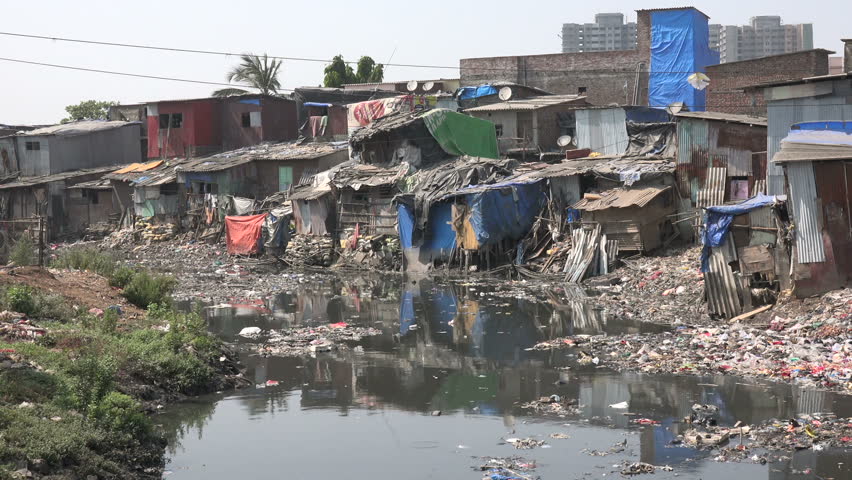
Image result for Third World Slums
This is where you came from.......

I think of my wife, who has a Vietnamese passport. To her, Singapore is heaven. It’s “MY COUNTRY.” During the last election, she told me that I was NOT TO VOTE ANYONE ELSE OTHER THAN THIS GOVERNMENT. As a native Singaporean who has a legal obligation to die for his country, I don’t think Singapore is as great as the tour guides make it out to be. While I respect successive Singapore governments for doing a relatively good job, I think my vote does get taken for granted.

Whenever I look at the different classes from elsewhere, I realise that it’s the people from “Shithole” countries that love Singapore for being Singapore. The people from “Non-Shitholes,” countries or the people “with skills we need,” tend to love Singapore for the good life that they have. The love for the country is in proportion to the size of the expat package.

The Donald was well aware of the fact that people from “Shithole” countries make the best workers when he was a businessman. He’s smart enough to realise that they also make the best scapegoats when you’re a politician. If only he’d actually pretend to be half as smart as he claims to be by quietly encouraging people from Shithole countries to come into America despite what he tells his supporters. He should even hire them to make life difficult for their former fellow countrymen knocking the door at the border (Just ask anyone of Indian decent who compare the treatment they get from White immigration officials and officials of Indian decent in the UK).

The other point that seems lost on the Donald is the fact that if you want to stop people from “Shithole” countries from coming in, you need to have a foreign policy that makes these countries less shitty. Let’s look at the Middle East, which is home to brutal dictators who have crushed their people. Think of the likes of “Saddam Hussein,” or “Hosni Mubarak,” who were happily brutalizing their own people with the blessings of the US Government. As one writer in the Financial Times said during the Arab Spring, “They don’t hate us because we’re free; they hate us because we supported the people who crushed their freedoms.” Haiti would be considerably less of a shithole if the US stopped backing the likes of the Duvalier’s.

Leaving aside the support for bad leaders in other places (a sin not limited to the US), one of the best ways to ensure that countries become shitholes, is by promoting protectionist trade policies. Basic economic theory shows that free trade and the free movement of money is beneficial to everyone. Yes, there are losers in globalization but on the whole, people win. While parts of the US have suffered with the moving of heavy industry to places like China, the US has remained the world power by moving into newer industries that pay better wages than the industries that were lost. Contrary to popular belief, China’s rise has helped the US – just ask the small college towns that are fighting to get students from China.

While Donald is complaining about people from Shithole countries, President Xi is trying to make his neighbourhood less of a shithole by pumping money into places like Cambodia, Sri Lanka and so on. As one South African I sat next to on plane said, “They are building infrastructure in Africa and the people are getting fed.”


Countries that don’t like “Shithole” countries around them shouldn’t focus on Shitholes. When you become obsessed with a shithole, you become a shit. Better to focus on exploiting the people from Shithole countries for your benefit and making the Shithole countries less shitty. 

Monday, January 22, 2018

WTF MOF?

By Wesley Gunter

I’m sure you’ve read the news lately about the brilliant marketing strategy taken by The Ministry of Finance to promote the upcoming budget - ‘Ministry of Finance pays for Instagram 'influencers' to promote Budget 2018’.

Firstly, this article is not meant to slam bloggers. As a marketer and owner of an agency I work with them on a regular basis to promote my clients. However, using fashion and lifestyle bloggers to promote a financial product to the masses is tantamount to eating soup kambing with chopsticks in a Chinese restaurant… Just because everyone in the room thinks chopsticks is an effective tool, it’s not necessarily gonna work.

There are just so many things I want to rant about regarding this whole scenario from society at large to just how stupid it sounds but I’m going to just speak from a marketing viewpoint and silently scream to myself…


The Numbers Game…

One of my greatest pet peeves about how marketing and PR has evolved is how everybody loves pegging it to numbers and statistics. Not everything is a god damn algorithm for Christ’s sakes..
PR IS NOT FUCKING SALES! There I said it! … Moving on now let’s get to the point. You can’t just make a marketing decision based on numbers alone and just because an ‘influencer’ has 3 million followers on her Instagram because she has silky smooth skin, she’s going to be the best marketing tool for your product and audience.

As much as this may be common sense, many marketers have lost the plot and are sold just because of the number of likes and followers REGARDLESS of the influencer’s background and what they actually do.

Which brings me to my next point..

What’s the objective???

It’s not surprising that the majority of Singaporeans who eagerly anticipate what the G will roll out every year with the budget are above 30. If you’ve got surmounting bills to pay, mouths to feed and probably an aging parent with some illness to look after while earning a meagre salary you’re gonna take every bit of charity you can get. The budget is not just ‘freebies’ to some, it’s a fucking matter of survival.

Now let’s shift focus to our adorable youth. The ‘disruptors’ of our society who wouldn’t bat an eyelid when it comes to splurging on that fancy meal or just going on a ‘sabbatical’ to ‘discover themselves’ in some far-flung destination. This is of course a generalisation of our ‘spoilt’ youth as branded by the older Singaporeans which is far from the truth. But by looking at the ‘influencers’ selected by MOF they tend to fall into this ‘fluff’ category

I’m sure there are many younger Singaporeans who depend on the budget to get by. It’s a shame that the ‘influencers’ used by MOF don’t seem to be a good representative of what younger Singaporeans would want from a government initiative


Do you know what you’re selling?

So we covered the problem with using a wrong marketing tool for a wrong audience. Now let’s talk about the human element here. If you wanted to sell nail polish to a bunch of teenagers would you use 45 year old retiree with a pot belly to do the job? I really don’t get what a bunch of happy go lucky millennials that spend their time eating at fancy restaurants and wearing little clothes would have something useful to say about a financial product which even the people that came up with the budget have trouble explaining.

I am all for ‘dumbing’ down something to make it understandable to your average joe. But how can you get someone that doesn’t even understand the fundamentals of your product to explain it to the masses?? That’s like getting a guy in China who just learned the English language for the past year to teach a classroom of foreigners modern literature. Bottomline: No one is going to learn jack shit.

So in a nutshell the problem doesn’t lie with bloggers but the medium used. It’s honestly pretty appalling to me how such a huge government body which is the authority on everything to do with money in this country can be so clueless when it comes to marketing their own product..

I’m sure the Ministry of Finance has enough budget in their coffers to hire a decent marketing and PR agency no?


Wesley Gunter is the owner and PR Director of Right Hook Communications (www.righthook.com.sghttps://www.righthook.com.sg/), a boutique agency that loves to push boundaries and buttons

Wednesday, January 17, 2018

Seeking Diversity

I’m going to start the early part of 2018 by being unashamedly commercial of a potential venture that is probably not going to generate much money – my blog, which I started sometime in 2006, when I had my own little PR business.

I started blogging with no idea of where things would lead. At the time of writing, it was just a place where I placed the articles that I was planning to write for the mainstream until they were actually published by the mainstream. I didn’t even think of the possibility of making money from it.

However, times are changing. Over the years, the blog has grown an audience. If the analytics of blogger platform are to be believed I am no longer a “Singapore” only blogger. If you believe the analytics provided by the blogger platform, the largest audience for most of my blogs is in the USA and ironically the second largest audience for my main English blog is in France. One of the most popular pieces on the blog is a piece that lifted from Haaretz, the Israeli liberal paper.

On a personal basis, people have told me that they read what I write. I remember Supriyo Sircar, the CEO Digileap and former CEO of Polaris Financial Technology Asia Pacific telling me that my blog was “spicy,” and Meshari Bin Khalid, former Director General of SAGIA ASEAN thanking me for this blog. I’ve received further signs of the blog being read. One of the most prominent was a Reuters Journalist contacting me out of the blue for a quote and more importantly, my father told me with regards to this blog – “I can protect you from many things – but this government isn’t one of them.”
So, it did occur to me that if people were going to know me for the blog(s) that I publish, I might as well try and earn a few pennies of the blog. Thankfully Google has made it fairly easy in as much as all I had to do was to sign up for an AdSense account. So, sometime in 2017, ads have started appearing and to the shock and horror of my parents (lifelong advertising producers), I’ve become a space owner.

However, times are changing and its tough to get the traffic to make online advertising pay. I seem to have a following but like as every parent knows, things have to become about something more than me. My main “Ah-Ha” is that the blog needs more contributories. My views are known but I want the views of others to be shared.

Other than the blog, I’ve realized that I have a diverse group of friends, ranging from CEO’s and Excellencies to street hawkers and bar girls. So, I’m hopping my diverse range of friends with a diverse range of views will contribute to this blog and ad some spice. In the age of Donald Trump, we have a wonderful range of disunified people who can be brought together to make a beautiful story.
So far, four friends have agreed to contribute to the blog. I’ve made an announcement that that they’ve agreed to contribute to my blog on a Facebook Page called “Tangoland Blogs.” Once again, the analytics have shown that the decision to have other people contribute has proven to be popular.

I’m looking for more people to contribute to the blog. My basic terms and conditions are:

  • 1.      You can write about anything you want and you should try and make a commitment of once a month or at least once every two months.

  • 2.      While I can’t pay you directly (I still need my day and night job), I can provide you with some publicity with the right audience. You should have your byline, copyright for your piece will belong to you and if you want to add a designation or weblink to promote yourself, please do so.

  • 3.      There are two main points. I don’t have the resources to hire sub editors to fact check and so, responsibility for the accuracy of information is yours. I’m in the business of expressing opinions not reporting news.

  • 4.      If you have to get permission from your boss, please do so. I will assume that you when you send me a piece, you have cleared whatever you are supposed to get cleared.

  • 5.      I believe in Freedom of Speech and Expression. I don’t want people who will praise me for the sake of it. You can use my platform to slag me off and attack my opinions. I will not tolerate smear campaigns against my friends and family.

  • 6.      I will promote you on my Facebook and linkedin pages, so I think reciprocity on your social media pages is not unreasonable. I will also provide machine translation and publication of whatever you write in English, Bengali, Chinese, Japanese, French, Spanish, German, Bahasa Indonesia, Vietnamese, Italian, Nepali, Arabic, Hindi, Tamil and Thai.

  • 7.      Please support the advertisers of this blog. I need money to survive and if you want to build it to a stage where you get money for your contributions, please support the people paying.
  • 8.      For those of you who want to sponsor an article, please let me know. I’m starting out and I don’t turn down offers for money. But please make your sponsored article well written. I do provide writing services and I know writers who could do with the work.

  • 9.      So, if you want to have a bit of fun drop me a line at tigertang@hotmail.com and let me know what you are interested in writing about, how often you want to write and something about yourself. Please send your piece via MS Word format so that I can upload everything.  


Monday, January 15, 2018

The Things That Matter

Had a funny experience yesterday when I took a taxi. The taxi driver kept telling me how familiar I looked and I didn’t think much of it until he asked, “Are you from the Picture Farm (Dad’s Production House.)” It was then that I clicked, he was talking about my Dad, even if he had no idea who I was.

I used to get that a bit, especially when I worked in advertising. In fact, I got one of my best jobs (a small creative powerhouse called 10AM) from my Dad. Helps that the Old Man and I look very similar and to a certain extent we sound very similar.

My Dad has always been a special person. He’s done exceedingly well from his talents and his work as a photographer and advertising film director is still talked about even today. While, he hasn’t worked the way he has in his heyday, he’s doing well enough. An example of his work can be found at:


and the credits can be found at:


You could say that as a son of a successful father, life was always interesting. As a kid, everyone told me I was lucky to have him as a dad, even though I was living overseas most of the time. As I grew older and wasn’t make it in a similar industry to him …..well, life did get a little interesting
.
However, I’ve always been proud of my Dad and the work that he’s produced. My Dad came from humble beginnings and made it big as a local boy in a one-man show in an industry where someone from outside is always seen as more upmarket. Having gone through my own struggles, I have a lot of pride in the old man for doing what he did.

I don’t his achievements but I felt really proud of him when the guy told me, “Your Dad is a man of principles.” For some strange reason, being the son of a man with principles meant so much more to me than being the son a well to do businessman or a top artist.

I guess, I’ve learnt that life is filled with geniuses at this and that but it has very few men of principle and very few men who make it a point of take care of the little people. It also helps that my father doesn’t make a big deal about his “character.” It’s more my mother who talks about principles and integrity (Mum’s Dad being a civil servant who was known for being absolutely incorruptible.)

So, it suddenly made me feel really happy that I was the Son of Man of Principle. It was like a title or potential inheritance that was worth having and fighting over. So, I got say thanks to him for being a man of principle.


Wonder what my kid will want strangers to say about me? 

Thursday, December 28, 2017

At the Crossroad

It’s been an emotionally draining day in the office and so I thought I would take the time out to write my usual end of the year summary, something which has become a tradition for me ever since I start this blog about a decade ago.

World in events in 2017 have proved to be “interesting,” and the man we have to thank for it is the current resident of 1600 Pennsylvania Avenue, Mr. Donald Trump. From the moment he plonked his behind onto the desk of the Oval Office, the “Donald” has proceeded to run the American Government like his famous reality show- The Apprentice. Donald and the world media have worked together to ensure that “old media” remains more relevant than ever by publicizing the man himself.
For the most part, I’ve found the man vile. Foolish Cowards on their own are usually a pain in the arse but Foolish Cowards in positions of power are worse. What can be worse than having your life crapped on because some fool in power woke up on the wrong side of the bed?

However, as I grow older, I’ve become more accepting that there are certain things in life that I can’t change and that I can only accept things as they are. I’ve also learnt to make peace with certain things in my life. While one might conclude that life is generally sucky, I believe that if you calculate your blessings and look at what you already have, you may find that you’re better off than you think.
I take the fact that my health has remained relatively robust. Although I am not as fit as I once was, I’ve suffered no major health issues (baring three sick days this year) and I am glad to say that I am slowly but surely moving my weight southwards, which should help me have a better quality of life in the years to come.

Then there is the fact that I continue to remain gainfully employed in two jobs when most people worry about staying in one. While I don’t have anything to brag about on the professional front the way I had when I freelanced, I can say that my CPF (Central Provident Fund – Singapore’s National Pension system) has gone the right way and I’ve been able to make a more significant contribution to the family that I chose to bring into my life.

However, I am at the crossroads. I’ve had stability in two industries that were not ones that I looked for. I see myself being stable for a long while if I carry on down the path that I’ve been on but I don’t see myself going beyond where I am. So, the question remains, do I take the chance and what chance do I take.

I’m a believer in doing what works for you. I’ve reached the age where I need to admit to myself that I am not meant to be sitting behind a desk and the thing that works for me, isn’t the thing that necessarily works for everyone else. I’ve proven that I can be in a full time corporate environment but I don’t feel any sense of achievement. So, I need to work on where do I go from here in the next quarter.

As I sit by the crossroads, I must take the time out to mourn the passing of my old friend, Mr. Luke Fogarty, often known as the Old Rogue. Luke was what they call a “larger than life” character, who we all believed would outlives us all until he got struck by cancer this year. When I think of Luke, I think of his ability to have energy at all times and his incredible sense of optimism. I’ll always remember a 16-year old asking him what he wanted to do for retirement and the answer was, “He’s thinking of retirement at his age – I still haven’t figured out what I want to do when I grow up.” (He was in his 80s at the time). Luke was the man who encouraged me when I least expected it and I will always bless his heart for writing the testimonial he wrote for me when I was ready to adopt the character we call Jenny Tang.

Speaking of Jenny Tang, she finally buckled down and did something towards her school work. It was a little late in the day but she did enough to get through the next level at school. Now, the hope is that she really understands that she’s taking a public exam this year and does what she needs to do. As a parent, I need to be able to see her through this year and my biggest challenge is to ensure that she understands that she needs to use her potential this year.

I have hopes for the year to come and I have to thank the fact that I made a new friend in Mr. Greg Page, who is the husband of Lucy, one of my wife’s friends. I met Greg at the start of this year and although we’ve not had the chances to meet often, Greg has been a source of inspiration, who has reminded me of the important things in life – staying true to family and having passion for life. He has helped me by reminding me that you only get successful at something if you have a passion for it. In a way, Greg is the American who lives the reasons why America has been the main power of the world for the last two hundred years – openness to ideas and people, who differ from you (his background is Southern Baptist and tells me I’m one of the few liberals he likes 😉)


Next year could be challenging but like always, there’s always a case for being optimistic about the future. I think 2018 could be a very beautiful year. 

Thursday, December 21, 2017

It is easier for a camel to pass through the eye of a needle than a rich man to enter the kingdom of heaven.

It will be Christmas Day in 4 days and everything at work will slowly wind. While life in my White Collar existence slows down, my Blue-Collar character can expect to get busier while people get ready for wine, have dinner and have a lot of fun after spending a lot of money on things they do not really have need.

I do not want to deny the celebrations because they serve their purpose but I have not stopped being able to find ironic that we celebrate the birth of man was the great champion of the history of the poor and the oppressed with our biggest show of consumption.

Although I can hardly call myself a Christian, I believe in Jesus and in his message of love and compassion. For once, I really agree with my old school chaplain who told me, "You can not get all the answers from RE". I think he was a little disappointed that I could discuss theory and biblical concepts but I did not want to take that final step and get confirmation in the Church of England.

Talking about Christ (rather like talking about a great religious teacher, but since this is Christmas, Christ will be at the center), it's easy. I think of the number of devout followers of the Church who think nothing to donate part of their salary to the bottom of the shepherd's car, but somehow find it difficult to understand why the national aide who have not paid for the last 8 months does not find gratitude in doing free work. Once again, if you think that I am identifying Christians unjustly, I can give the example of Muslims who are proud of the number of times they pray, but when a dark-skinned beggar comes to them for alms, they show nothing but disdain for the beggar (Islam actually gives alms giving part of the duties of a good Muslim).

It is easy to go through the movements to feel charitable. It's a different story to do it, which is quite understandable. I think of my good friend Datuk Vinod Sekhar who, in a play that he wrote, said: "If suddenly the shit had a value, the poor would have found a way to be born without the assholes". I think of my poorer friends who can not afford the bus ticket to go to work, but end up using their last pennies for a beer or a smoke. Going out with poor people can make you break down in a great way. If nothing else, the poor are depressing louts.

Having said this, it is essential for the human soul to have compassion for others. In simple terms, you are the person you are partly because of God's will. I am who I am because somehow it was deemed appropriate in some cosmic court that I would be born in Singapore to have some decent people as parents . Even if I did not make it, I'm not hungry and I'm not starving. I was born with my members in functional order and an operational mind. Whatever being divine out there gave me a pretty decent leg giving me more than I realize I have.

So, I ask the question what can I do with all these gifts? I think most of us end up using what we have to do to make it ourselves, but there must be something more. Somehow, somewhere, people who are successful are those people who took Christ's message to heart and chose to look beyond themselves and did things to bring others with them. In some ways, we find ourselves exalted when we humiliate and do things that benefit the less fortunate.

Before the teachings of Christ, the Gods were always beings who were obviously more powerful than mortals. Zeus, for example, was not just a God, he was the King of Gods and mortal people built great statues for him or otherwise ...

Jesus, he did something different. He was born in a situation where he was barely above the donkey. He never made a lot of money and never did anything so obvious that people would immediately know. Instead, he never held income-generating work, remained at the lowest levels (tax collectors, prostitutes, etc.) and died as the lowest criminal form.

However, it is recognized by the living incarnation of God of over one billion people. Another billion people recognize him as the chief messenger of God and many others attribute it to God. His teaching forms the basis of what we call Western Civilization.

Jesus taught us that God was with the disadvantaged, people to whom everyone spit on him. I think Jesus would hate the high mouths and charlatans who profess his name

As Christmas approaches, I thank God for giving me the chances he's had. I hope in the insignificant life that I have lived that I might have done a thing or two for the less fortunate.

© BeautifullyIncoherent
Maira Gall